
Published August 24, 2026
5 Things to Check Before Buying Land in Texas

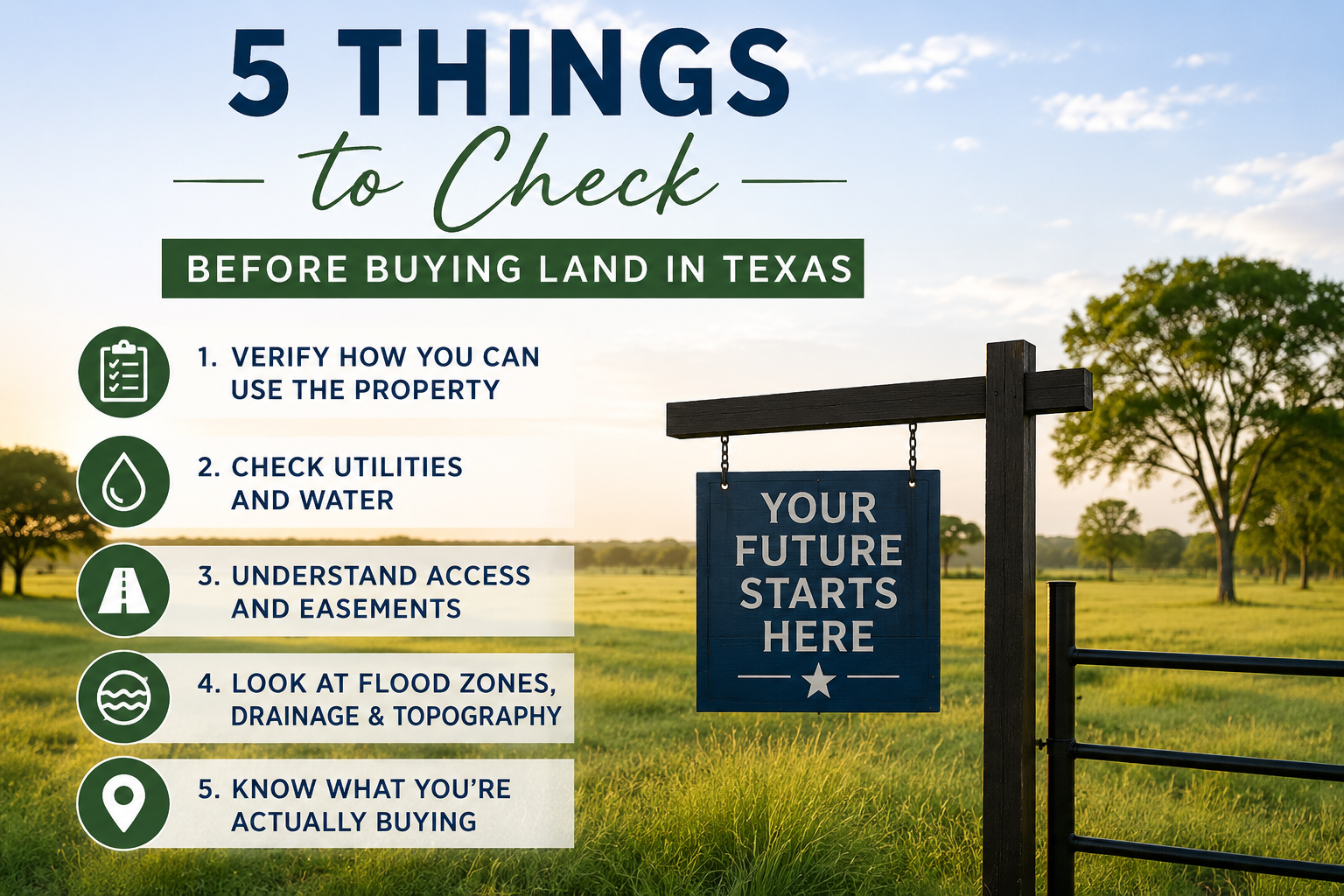
Buying land in Texas can be an exciting opportunity. Whether you're looking for acreage to build your dream home, a property for recreation, land for livestock, or an investment for the future, purchasing land is very different from buying an existing home.
A beautiful piece of property can look perfect on the surface, but there are important details you need to investigate before making an offer.
Here are five things every buyer should check before purchasing land in Texas.
1. Verify How You Can Use the Property
One of the first questions you should ask is: What can I actually do with this land?
Don't assume that because a property is advertised as "unrestricted" that there are absolutely no limitations.
Before purchasing, investigate:
- Deed restrictions
- HOA or POA requirements
- County regulations
- Zoning, if applicable
- Restrictions on manufactured homes
- Livestock regulations
- Restrictions on additional homes or structures
- Commercial-use restrictions
- Easements affecting the property
If your plan is to build a home, barndominium, workshop, guest house, or other structure, make sure your intended use is allowed before you purchase.
2. Check Utilities and Water
Utilities can make a huge difference when it comes to the cost and feasibility of developing land.
Ask whether the property has access to:
- Electricity
- Public water
- Rural water
- A private well
- Sewer
- A septic system
- Natural gas or propane
- Internet service
If utilities aren't already connected, find out how far they are from the property and what it could potentially cost to bring them onto the property.
What About a Well or Septic?
Many rural Texas properties don't have access to municipal water or sewer. Instead, they rely on private wells and septic systems.
If you're purchasing vacant land, you may need to determine whether the property is suitable for a septic system and whether a well can be installed.
These aren't details you want to discover after closing.
3. Understand Access and Easements
It may seem obvious that a property has road access, but buyers should verify legal access, not just physical access.
Determine:
- What road the property fronts
- Whether the road is public or private
- Who maintains a private road
- Whether there are shared-driveway agreements
- Whether access depends on an easement
- Whether utility easements cross the property
An easement can affect where you can build, place a driveway, install fencing, or construct other improvements.
When buying land, understanding how you legally access the property is just as important as seeing the property in person.
4. Look at Flood Zones, Drainage & Topography
Not every acre of land is equally usable.
Before purchasing, investigate the property's:
- Flood-zone status
- Drainage
- Elevation
- Soil conditions
- Creek or waterway locations
- Pond or wetland areas
- Steep slopes
- Buildable areas
A property may contain 10 acres, but that doesn't necessarily mean all 10 acres are usable for building or other purposes.
This is especially important for properties near lakes, creeks, and rivers throughout Texas.
If you're considering land near Richland-Chambers Lake or other waterways, take the time to understand how the property's location may affect future construction, insurance, access, and usability.
5. Know What You're Actually Buying
Before purchasing land, make sure you understand the property's boundaries and exactly what conveys with the sale.
A survey can help identify:
- Property boundaries
- Acreage
- Easements
- Fences
- Encroachments
- Road access
- Structures
- Other potential boundary issues
You should also ask about mineral rights, water rights, timber, existing leases, and other interests associated with the property.
Just because something is physically located on the property doesn't necessarily mean it automatically conveys with the purchase.
Don't Let a Beautiful Piece of Land Skip Your Due Diligence
Buying land can be one of the best ways to create the property you've always wanted—but it's important to look beyond the view.
Before purchasing, make sure you understand what you can build, how you'll access the property, where your utilities will come from, whether the land is usable, and exactly what rights and restrictions come with the property.
The right questions before closing can save you significant time, money, and frustration later.
Looking for Land in Navarro County?
The Laura Smith Real Estate Team understands that buying land comes with a different set of questions and considerations than buying a traditional home. Our team works with buyers throughout Corsicana, Navarro County, Richland-Chambers Lake, and surrounding areas to help them navigate the process of finding and purchasing the right property.
Whether you're looking for acreage to build your forever home, a recreational property, land for your animals, or an investment opportunity, the Laura Smith Real Estate Team is here to help you understand your options and move forward with confidence.
Ready to start looking for Texas land? Contact the Laura Smith Real Estate Team and let's find a property that fits your plans.